'However, if John Cage theoretically claimed that any sound can be music, then we logically must conclude that, properly framed, any language can be poetry.
When I reach 40, I hope to have cleansed myself of all creativity.'
Read the whole text at http://drunkenboat.com/db5/goldsmith/uncreativity.html
Tuesday, February 28, 2006

Saturday, February 25, 2006
Jacket magazine publishes Court Transcripts of Ern Malley case

http://jacketmagazine.com/17/trial-harris.html
Court Transcript of the Trial of Max Harris
in the Adelaide Police Court, 1944
Preamble
“I have found that people who go into parks at night go there for immoral purposes. My exper as police officer might under certn circs., tinge my apprecn of literature.”
Edited by John Tranter in October and November 2005
Five pages of that photocopy can be viewed here.
The original document is court typist’s transcript of the trial of Max Harris, an editor of Angry Penguins magazine, for the offence of publishing indecent advertisements. He was 23 years old at the time. The trial was held in the Adelaide Police Court in September 1944. Mr Harris was convicted of the offence and fined.
Further documentary material and commentary on the 1944 Ern Malley hoax which led to this trial can be found in this issue (17) of Jacket magazine on the Internet at http://jacketmagazine.com/17/, a special issue devoted to hoax poetry.
Friday, February 24, 2006
In Sight of Raftery Poetry Competition 2006
In conjunction with In Sight Of Raftery Poetry Festival, which is taking place in Kiltimagh, Co. Mayo on the June bank holiday weekend (June 2-4, 2006), the organisers are running an International poetry competition for new and original work. The competition is open to all budding and established national and international writers and the adjudicator for the competition is the popular Mayo poet Ger Reidy. An entry form and further details are available from www.mayowriters.org/poetry_competition.htm and the closing date for receipt of entries is Friday, April 28th 2006. Details of the festival are also available from the website.
Saturday, February 18, 2006
Friday, February 17, 2006
Pointing the Bone at Myself
It’s a dried out bone from last night’s dinner, mortal to the touch. I hold it and stand still to daydream before throwing it in the bin. The cat is not allowed chicken bones. She also is mortal and may choke on a bone fragment. Whereas I point the bone at myself, then the bin, and think of its journey – from chookyard to Refuse Disposal Centre. The simple things in life are all complicated … From father’s trip home from war in New Guinea to my final trip to Karrakatta Cemetery, who knows when. My bones will write a scribbled note, broken here and there like an old man’s handwriting, and saying, But once he stood and walked upon the earth. And fell. Off his bike, down a cliff, a night club’s steep stairs, Australia’s backyard behind a shearer’s shed outside of Mount Magnet. And stood again each time to finally fall down and stay down here, cat sleeping in his chair at home.
Thursday, February 16, 2006
Modern Colours by Curnow, W

This from Ron Silliman's blog at www.ronsilliman.blogspot.com/ -
'My favorite poet named Wystan has a new book out. Actually, my favorite poet named Wystan, Wystan Curnow, known also as editor & critic, known inevitably further as the son of Allen Curnow, the late great late-modernist poet of New Zealand. But Wystan always has been a fine poet all on his own, at least so long as I’ve known him (and those years have begun piling up).
It’s a simple enough book in a short run, just 500 copies, not very much for somebody whose writing is known & appreciated on three continents. And just 46 pages, although it feels like more because each page consists of a sheet of paper folded over, a so-called French fold – at first I thought the pages were still uncut until I realized there was nothing printed on the interiors. The poems inside are quite different from one another, albeit all in a post-New American aesthetic mode that may remind some new readers of William Carlos Williams, Jimmy Schuyler or Michael Palmer, an intriguing trio I never would have thought to triangulate I had not read these poems. Indeed, different poems are printed in type sizes as small as eight points & as large as ten.'
... and more, with generous quotes. Worth reading, I assure you.
Wednesday, February 15, 2006
Poem for Jen
Valentine’s Day 2006
Before your door
I leave a stone
a tourmaline
as unique as you
and I stand back
to see if
you’ll come forward
.
Each day
fine rings ripple out
on the lake
fish rising
for air or food
like my mouth open to you
and your mouth
opening for me
Before your door
I leave a stone
a tourmaline
as unique as you
and I stand back
to see if
you’ll come forward
.
Each day
fine rings ripple out
on the lake
fish rising
for air or food
like my mouth open to you
and your mouth
opening for me
Saturday, February 11, 2006
Sappho
Sappho
Ancient Greek bust of Sappho the Eresian.
Sappho (Attic Greek Σαπφώ Sapphô, Aeolic Greek Ψάπφα Psappha) was an Ancient Greek lyric poet from the city of Eressos on the island of Lesbos, which was a cultural centre in the 7th century BC. She was born sometime between 630 BC and 612 BC. The bulk of her poetry is now lost, but her reputation in her time was immense, and she was reputedly considered by Plato as the tenth Muse.
Life
Sapho by Gustav Klimt
Sappho, daughter of Scamander and Cleïs, was married (Attic comedy says to a wealthy merchant, but that is apocryphal) and had a daughter also named Cleïs. She became very famous in her day for her poetry – so much so that the city of Syracuse built a statue to honor her when she visited. Her family was politically active, which caused Sappho to travel a great deal. She was also noted during her life as the headmistress of a sort of Greek finishing school for girls. Most likely the objects of her poetry were her students. Sappho had three brothers, married and had at least one daughter, was exiled to Syracuse for political reasons, returned in 581 BC, and died of old age.
She was one of the canonical nine lyric poets of archaic Greece. Older critics sometimes alleged that she led an aesthetic movement away from typical themes of gods, to the themes of individual human experiences and emotions, but it is now considered more likely that her work belongs in a long tradition of Lesbian poetry, and is simply among the first to have been recorded in writing.
Some of her love poems were addressed to women. The word lesbian itself is derived from the name of the island of Lesbos from which she came. (Her name is also the origin of its much rarer synonym sapphic).
Because of its eroticism and of the difficulties posed by its dialect, her work was not included in the Byzantine school curriculum. The manuscript tradition therefore broke off, but copies of her work have been discovered in Egyptian papyri of an earlier period. [1]
Romantic representation of Sappho
In ancient and medieval times she was famous for (according to legend) throwing herself off a cliff due to unrequited love for a male sailor named Phaon. This legend dates to Ovid and Lucian in Ancient Rome and certainly is not a Christian overlay.
The 3rd Century philosopher Maximus of Tyre wrote that Sappho was "small and dark" and that her relationships to her female friends were similar to those of Socrates:
What else was the love of the Lesbian woman except Socrates' art of love? For they seem to me to have practiced love each in their own way, she that of women, he that of men. For they say that both loved many and were captivated by all things beautiful. What Alcibiades and Charmides and Phaedrus were to him, Gyrinna and Atthis and Anactoria were to the Lesbian.
A major new literary discovery, the Milan Papyrus,[2] recovered from a dismantled mummy casing and published in 2001, has revealed the high esteem in which the poet Posidippus of Pella, an important composer of epigrams (3rd century BC), held Sappho's 'divine songs'. An English translation of the new epigrams, with notes, is available [3], as is the original Greek text. [4]
An epigram in the Anthologia Palatina ascribed to Plato states:
Some say of nine Muses, how neglected!
Behold, Sappho, from Lesbos, is the tenth
Aelianus Claudius wrote in Assorted History (Ποικίλη ιστορία) that Plato called Sappho wise.
Horace writes in his Odes that Sappho's lyrics are worthy of sacred admiration.
One of Sappho's poems was famously translated by the 1st century BC Roman poet Catullus in his "Ille mi par esse deo videtur" (Catullus 51).
Works
We have a single complete poem, Fragment 1, Hymn to Aphrodite, and three more virtually complete, besides many shorter fragments.
Fragment 16
These — cavalry, others — infantry
others yet, navies, upon the black earth
hold most beautiful. But I, whatever
you desire.
To make this clear to anyone
is most easy.
Helen, surpassing all men
in beauty, forsaking
the best of men
left and sailed away to Troy.
not thinking of her child or her dear parents
led away
[three missing lines]
now I think of Anaktoria, who is far away
I desire to see her lovely gait
the shining sparkle of her face
more than the Lydian chariots, and armoured
foot soldiers.
Ancient Greek bust of Sappho the Eresian.
Sappho (Attic Greek Σαπφώ Sapphô, Aeolic Greek Ψάπφα Psappha) was an Ancient Greek lyric poet from the city of Eressos on the island of Lesbos, which was a cultural centre in the 7th century BC. She was born sometime between 630 BC and 612 BC. The bulk of her poetry is now lost, but her reputation in her time was immense, and she was reputedly considered by Plato as the tenth Muse.
Life
Sapho by Gustav Klimt
Sappho, daughter of Scamander and Cleïs, was married (Attic comedy says to a wealthy merchant, but that is apocryphal) and had a daughter also named Cleïs. She became very famous in her day for her poetry – so much so that the city of Syracuse built a statue to honor her when she visited. Her family was politically active, which caused Sappho to travel a great deal. She was also noted during her life as the headmistress of a sort of Greek finishing school for girls. Most likely the objects of her poetry were her students. Sappho had three brothers, married and had at least one daughter, was exiled to Syracuse for political reasons, returned in 581 BC, and died of old age.
She was one of the canonical nine lyric poets of archaic Greece. Older critics sometimes alleged that she led an aesthetic movement away from typical themes of gods, to the themes of individual human experiences and emotions, but it is now considered more likely that her work belongs in a long tradition of Lesbian poetry, and is simply among the first to have been recorded in writing.
Some of her love poems were addressed to women. The word lesbian itself is derived from the name of the island of Lesbos from which she came. (Her name is also the origin of its much rarer synonym sapphic).
Because of its eroticism and of the difficulties posed by its dialect, her work was not included in the Byzantine school curriculum. The manuscript tradition therefore broke off, but copies of her work have been discovered in Egyptian papyri of an earlier period. [1]
Romantic representation of Sappho
In ancient and medieval times she was famous for (according to legend) throwing herself off a cliff due to unrequited love for a male sailor named Phaon. This legend dates to Ovid and Lucian in Ancient Rome and certainly is not a Christian overlay.
The 3rd Century philosopher Maximus of Tyre wrote that Sappho was "small and dark" and that her relationships to her female friends were similar to those of Socrates:
What else was the love of the Lesbian woman except Socrates' art of love? For they seem to me to have practiced love each in their own way, she that of women, he that of men. For they say that both loved many and were captivated by all things beautiful. What Alcibiades and Charmides and Phaedrus were to him, Gyrinna and Atthis and Anactoria were to the Lesbian.
A major new literary discovery, the Milan Papyrus,[2] recovered from a dismantled mummy casing and published in 2001, has revealed the high esteem in which the poet Posidippus of Pella, an important composer of epigrams (3rd century BC), held Sappho's 'divine songs'. An English translation of the new epigrams, with notes, is available [3], as is the original Greek text. [4]
An epigram in the Anthologia Palatina ascribed to Plato states:
Some say of nine Muses, how neglected!
Behold, Sappho, from Lesbos, is the tenth
Aelianus Claudius wrote in Assorted History (Ποικίλη ιστορία) that Plato called Sappho wise.
Horace writes in his Odes that Sappho's lyrics are worthy of sacred admiration.
One of Sappho's poems was famously translated by the 1st century BC Roman poet Catullus in his "Ille mi par esse deo videtur" (Catullus 51).
Works
We have a single complete poem, Fragment 1, Hymn to Aphrodite, and three more virtually complete, besides many shorter fragments.
Fragment 16
These — cavalry, others — infantry
others yet, navies, upon the black earth
hold most beautiful. But I, whatever
you desire.
To make this clear to anyone
is most easy.
Helen, surpassing all men
in beauty, forsaking
the best of men
left and sailed away to Troy.
not thinking of her child or her dear parents
led away
[three missing lines]
now I think of Anaktoria, who is far away
I desire to see her lovely gait
the shining sparkle of her face
more than the Lydian chariots, and armoured
foot soldiers.

Wednesday, February 08, 2006
Silence is Golden
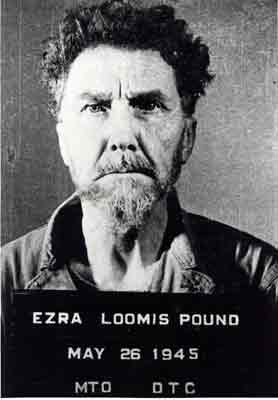
Hello, folks. My internet connection has been down for sometime, so I have been silent here. But now it is time to speak up ... when I have something to say. Good ol' Uncle Ezra remained silent for many years before his death. I still enjoy the best of the Pisan Cantos ...
Sunday, January 29, 2006
Home Again
I have been away in Canberra and Corowa, and not only saw a variation on the Australian countryside but I had a distinctly different art experience. At the National Gallery of Australia, in Canberra, I saw Pollock's 'Blue Poles' which I have wanted to view 'in the flesh' for a very long time. I don't have to tell you it's a great artwork. I also saw Fred Williams and Brett Whiteley paintings which gave me a lift, plus of course other masterpieces by Drysdale, Nolan and co.
In Corowa I stayed with Bill and Vera Reeves - Vera being an artist and an active member of the Rutherglen Artists' Society. Vera started painting late in life and has already produced a large body of work in oils, acrylics, watercolours, etc. Before I went away, I took some poetry writing lessons at the Atwell Gallery over here, so I was interested to compare the two groups ... You can take a look yourself at http://www.rutherglenvic.com/visitorinfo/visitorinfo_content.asp?visitorInfoID=10 and http://members.iinet.net.au/~atwelart/index.htm
In Corowa I stayed with Bill and Vera Reeves - Vera being an artist and an active member of the Rutherglen Artists' Society. Vera started painting late in life and has already produced a large body of work in oils, acrylics, watercolours, etc. Before I went away, I took some poetry writing lessons at the Atwell Gallery over here, so I was interested to compare the two groups ... You can take a look yourself at http://www.rutherglenvic.com/visitorinfo/visitorinfo_content.asp?visitorInfoID=10 and http://members.iinet.net.au/~atwelart/index.htm
Thursday, January 19, 2006
Blue Poles at the NGA

I'm in Canberra at present so I took the opportunity yesterday of seeing the National Gallery. Great! I saw Pollock's great masterwork Blue Poles in living colour! & The Drover's Wife by Drysdale, a few Arthur Boyd's that I love - and a shop full of arty farty nicknacks which I would have loved to buy a take home - a tin Ned Kelly a la Nolan for one. Instead, I purchased a Fred Williams & a Brett Whiteley print.
There's beautiful Tang Dynasty sculpture downstairs ... and Monet, of course. I didn't see all of it, so I shall return one other day soon - hopefully.
Saturday, January 14, 2006
Friday, December 30, 2005
More Frantastic fun with Fran Sbrocchi


One of a series of computer paintings by poet and teacher, Fran Sbrocchi (who also makes fine muffins!).
Thursday, December 29, 2005
Snap - 28/12/2005
in her last days
my mother manipulated us
openly
blackmailing us with
senility
in all its flavours
'o, I know what you're up to'
she'd say, seeing conspiracy everywhere
and call me by my brother's name
and accuse me of his faults
'you can't hide from me'
she'd say, and we'd resent it
but now years down the track,
sober drunks praise her in
the public bar of their recovery,
and I glow in her reflected serenity
and phone to tell my brother
what a good woman she was,
our mother of the manipulative ways -
he laughs and asks
for a contribution to her last pharmacy bill
and mimics her voice -
'you can't hide from me'
my mother manipulated us
openly
blackmailing us with
senility
in all its flavours
'o, I know what you're up to'
she'd say, seeing conspiracy everywhere
and call me by my brother's name
and accuse me of his faults
'you can't hide from me'
she'd say, and we'd resent it
but now years down the track,
sober drunks praise her in
the public bar of their recovery,
and I glow in her reflected serenity
and phone to tell my brother
what a good woman she was,
our mother of the manipulative ways -
he laughs and asks
for a contribution to her last pharmacy bill
and mimics her voice -
'you can't hide from me'
Tuesday, December 27, 2005
More Toilet Door News
Toilet Door Poems will commission 6 emerging poets and 6 visual designers, to create 6 posters for display on the backs toilet doors during April 2006, in domestic Qantas terminals, and Greater Union cinemas, in Sydney and nationally.
The project will also commission 1 poet to write a mini-essay about an aspect of poetry in the public space, to be published online at www.redroomorganisation.org and presented publicity, at the project's launch.
The poems will be displayed for the duration of APRIL 2006, in these spaces, thanks to the support from ‘The Letter Corporation, The City of Sydney and The John Butler Foundation's 'social activisim through the arts' fund.
Our design partners, DesignWorks Enterprise IG, will co-ordinate the selection of artists and art design, introducing a strong collaborative element between the poet and the artist.
Selected poets will be recorded reading their poems for a red room radio, broadcast via the national community radio satellite.
The poems will replace advertising with poetry and art by emerging Australian poets and artists in spaces that are both very public, and uniquely private.
Each illustrated poem will explore and interpret a theme of social, political, cultural and creative relevance to each poet and designer, offering a balance between creative excellence and a social aware art for the public, humorous and serious at once.
SUBMISSIONS open on DECEMBER 1 2005 and close JANUARY 23 2006
Conditions of entry for poets
Poems can’t have been previously published.
Poets selected for the project will be emerging poets, that means no more than one book (chap books excluded) of poetry previously published.
Poems remain the exclusive copyright of red room company until project completion and future publication must acknowledge previous publication in this project.
Poems submitted must include poet contact details
Poets must be Australian residents
Poems can be sent via email or hard copy to The Red Room Company PO box 1389 Darlinghurst, NSW 1300
Poems must reach us by the 23rd January 2006
Conditions of entry for artists
Artists selected for the project will be emerging artists, that means not as famous as John Olsen.
Art works remain the exclusive copyright of red room company until project completion and future publication must acknowledge previous publication in this project.
Works submitted must include poet contact details
Artists must be Australian residents
An example of previous art work must fit into an A4 envelope (CDs, photographs, photocopies accepted) to
The Red Room Company PO box 1389 Darlinghurst, NSW 1300
Artworks must reach us by the 13th January 2006
Artists will be contacted separately, details here soon.
Selection committee
Poem and art selection committee will include an emerging and established poet. Also involved in the selection process will be a representative from the John Butler Foundation and The City of Sydney
Warning
Please don't submit poems built on toilet humour unless they are outstanding
The selected poems will aim to explore issues of social, political, cultural and creative relevance to broad audience.
Further detailsPlease contact johanna@redroomorganisation.org
The project will also commission 1 poet to write a mini-essay about an aspect of poetry in the public space, to be published online at www.redroomorganisation.org and presented publicity, at the project's launch.
The poems will be displayed for the duration of APRIL 2006, in these spaces, thanks to the support from ‘The Letter Corporation, The City of Sydney and The John Butler Foundation's 'social activisim through the arts' fund.
Our design partners, DesignWorks Enterprise IG, will co-ordinate the selection of artists and art design, introducing a strong collaborative element between the poet and the artist.
Selected poets will be recorded reading their poems for a red room radio, broadcast via the national community radio satellite.
The poems will replace advertising with poetry and art by emerging Australian poets and artists in spaces that are both very public, and uniquely private.
Each illustrated poem will explore and interpret a theme of social, political, cultural and creative relevance to each poet and designer, offering a balance between creative excellence and a social aware art for the public, humorous and serious at once.
SUBMISSIONS open on DECEMBER 1 2005 and close JANUARY 23 2006
Conditions of entry for poets
Poems can’t have been previously published.
Poets selected for the project will be emerging poets, that means no more than one book (chap books excluded) of poetry previously published.
Poems remain the exclusive copyright of red room company until project completion and future publication must acknowledge previous publication in this project.
Poems submitted must include poet contact details
Poets must be Australian residents
Poems can be sent via email or hard copy to The Red Room Company PO box 1389 Darlinghurst, NSW 1300
Poems must reach us by the 23rd January 2006
Conditions of entry for artists
Artists selected for the project will be emerging artists, that means not as famous as John Olsen.
Art works remain the exclusive copyright of red room company until project completion and future publication must acknowledge previous publication in this project.
Works submitted must include poet contact details
Artists must be Australian residents
An example of previous art work must fit into an A4 envelope (CDs, photographs, photocopies accepted) to
The Red Room Company PO box 1389 Darlinghurst, NSW 1300
Artworks must reach us by the 13th January 2006
Artists will be contacted separately, details here soon.
Selection committee
Poem and art selection committee will include an emerging and established poet. Also involved in the selection process will be a representative from the John Butler Foundation and The City of Sydney
Warning
Please don't submit poems built on toilet humour unless they are outstanding
The selected poems will aim to explore issues of social, political, cultural and creative relevance to broad audience.
Further detailsPlease contact johanna@redroomorganisation.org
Toilet Door Poetry Opportunity :-)
Dear Poets and writers and visual artists,
Submissions are now open for the 2006 Toilet Door poetry project.
Six emerging poets and artists are wanted to create illustrated
poem posters for exhibition on the back of toilet doors in Qantas
domestic terminals, greater union and village cinemas, nationally
in April 2006.
Please see attached PDF for details [try the link below].
Happy summer swims,
Johanna
Johanna Featherstone
The Red Room Company
www.redroomorganisation.org
Submissions are now open for the 2006 Toilet Door poetry project.
Six emerging poets and artists are wanted to create illustrated
poem posters for exhibition on the back of toilet doors in Qantas
domestic terminals, greater union and village cinemas, nationally
in April 2006.
Please see attached PDF for details [try the link below].
Happy summer swims,
Johanna
Johanna Featherstone
The Red Room Company
www.redroomorganisation.org
Monday, December 26, 2005
Snap on Christmas Day
6.15am
i begin the festivities
by watering the lawn
and the two single trees
that stand two metres tall
and five metres apart
their leafy round heads
dripping like mops
a wattlebird flies in
and shakes her body
among the leaves
bathes with gusto
when in flies her would-be lover
so she flies to
the other green mop
both trees now alive
a bird each
and not a partridge
or a pear tree
in sight
i begin the festivities
by watering the lawn
and the two single trees
that stand two metres tall
and five metres apart
their leafy round heads
dripping like mops
a wattlebird flies in
and shakes her body
among the leaves
bathes with gusto
when in flies her would-be lover
so she flies to
the other green mop
both trees now alive
a bird each
and not a partridge
or a pear tree
in sight
Thursday, December 22, 2005
Snow School by Fran Sbrocchi

Snow School by Fran Sbrocchi. I suppose it helps to know that Fran grew up in Canada :-) With this painting she sent a note which read, in part, Kids in our time built a nice house and put a stove in it for winter school lunches. Beautiful. Thanks, Fran ... And happy jolly, merry holly to all!
Subscribe to:
Posts (Atom)